We are proud to spotlight the growing collaboration between Harbour Oysters, Sussex Bay, and Littlehampton Harbour Board, a partnership rooted in innovation, community action and a shared commitment to restoring our local marine environment.
A new collaborative partnership between Harbour Oysters, Sussex Bay, and Littlehampton Harbour Board is demonstrating how nature‑based solutions and cross‑sector collaboration can drive meaningful improvements to local marine environments.
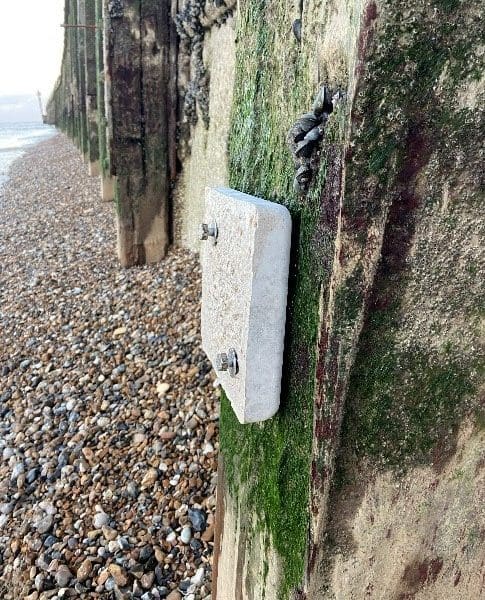
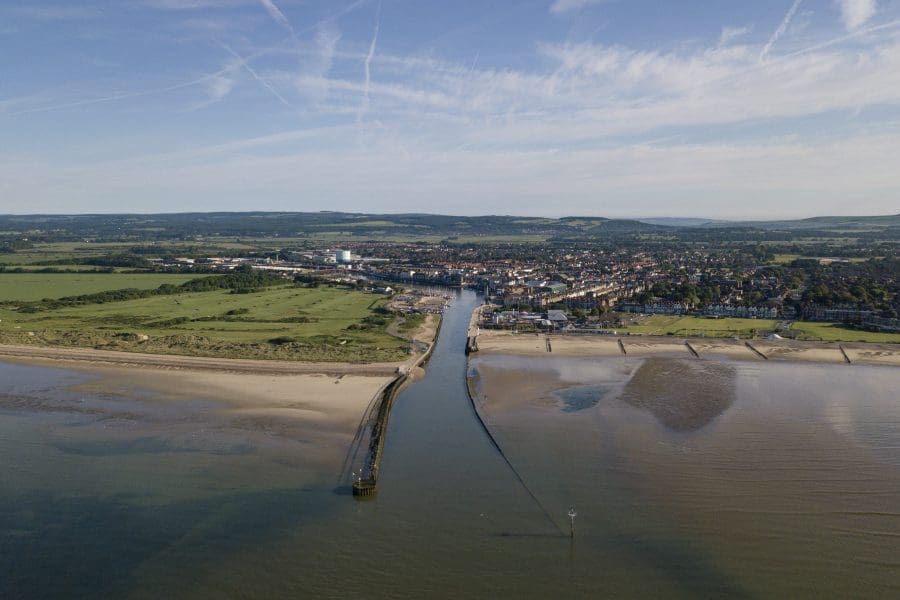
The partnership recently delivered a pilot native oyster installation at Littlehampton Harbour, marking an important milestone in expanding oyster‑led restoration projects along the Sussex coast. The initiative builds on Harbour Oysters’ proven work in Chichester Harbour and Emsworth, applying the same science‑led and community‑focused approach to the River Arun.
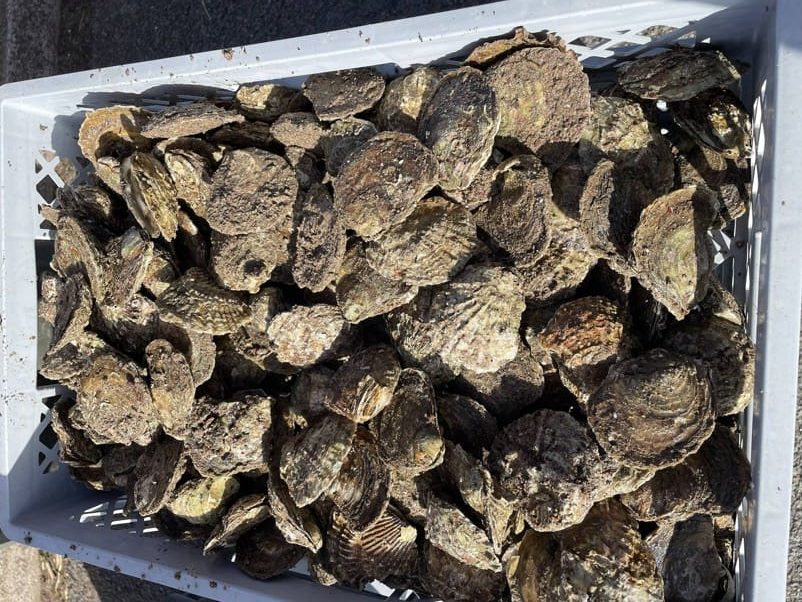
Founded by marine professionals and sisters Lottie and Poppy Johns, Harbour Oysters uses native oysters (Ostrea edulis) to naturally improve water quality, enhance biodiversity and restore lost marine habitats. Often referred to as “ecosystem engineers”, a single adult oyster can filter more than 150 litres of water per day, helping to remove pollutants and improve water clarity while providing habitats for other marine species.

Working alongside Harbour Oysters, Sussex Bay has played a key role in supporting, connecting and championing the project as part of its wider mission to restore the health of coastal waters and marine ecosystems across Sussex. Littlehampton Harbour Board has provided vital operational support, ensuring the project aligns with safe harbour operations while exploring innovative ways to enhance environmental resilience within a busy working port.
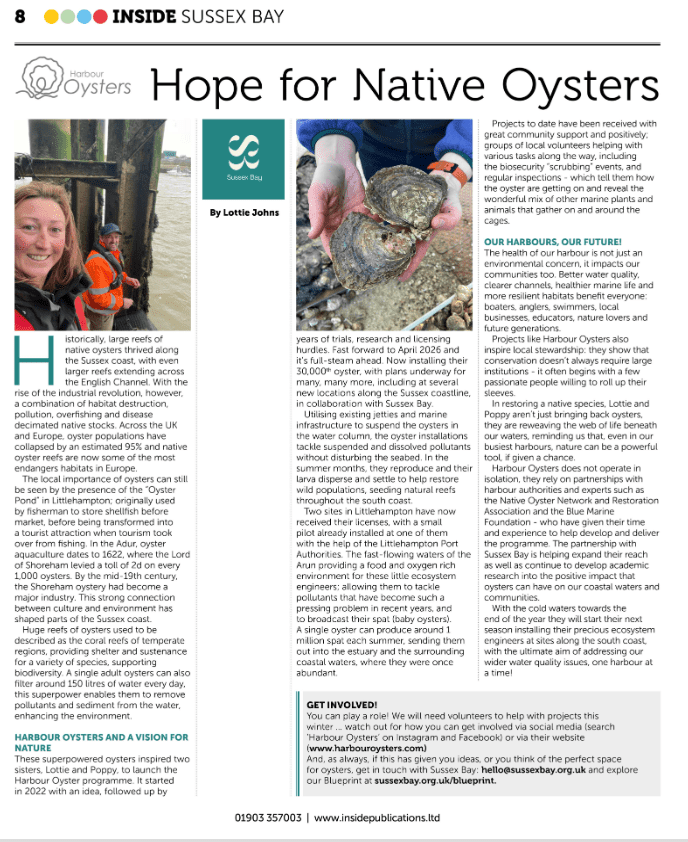
The collaboration was recently highlighted in Inside Sussex Bay, where Harbour Oysters featured in an article exploring the dramatic decline of native oysters — with more than 95% lost from UK waters — and the growing importance of partnerships in reversing this trend. The feature recognised the Littlehampton pilot as a strong example of how local organisations can work together to deliver practical, scalable solutions for nature recovery.
Looking ahead, following the success of the pilot installation, further sites within Littlehampton Harbour have now received the necessary licences for additional oyster installations. These forthcoming sites represent the next phase of the project, allowing the partnership to build on early learning, expand environmental benefits and further embed oyster restoration within the harbour environment.
Together, Harbour Oysters, Sussex Bay and Littlehampton Harbour are demonstrating that collaborative action — grounded in science, local knowledge and shared ambition — can play a vital role in creating healthier, more resilient coastal waters for generations to come. Inside West Worthing May 2026
The following link Blog / News — Sussex Bay provides an insight into the Native Oyster Project.